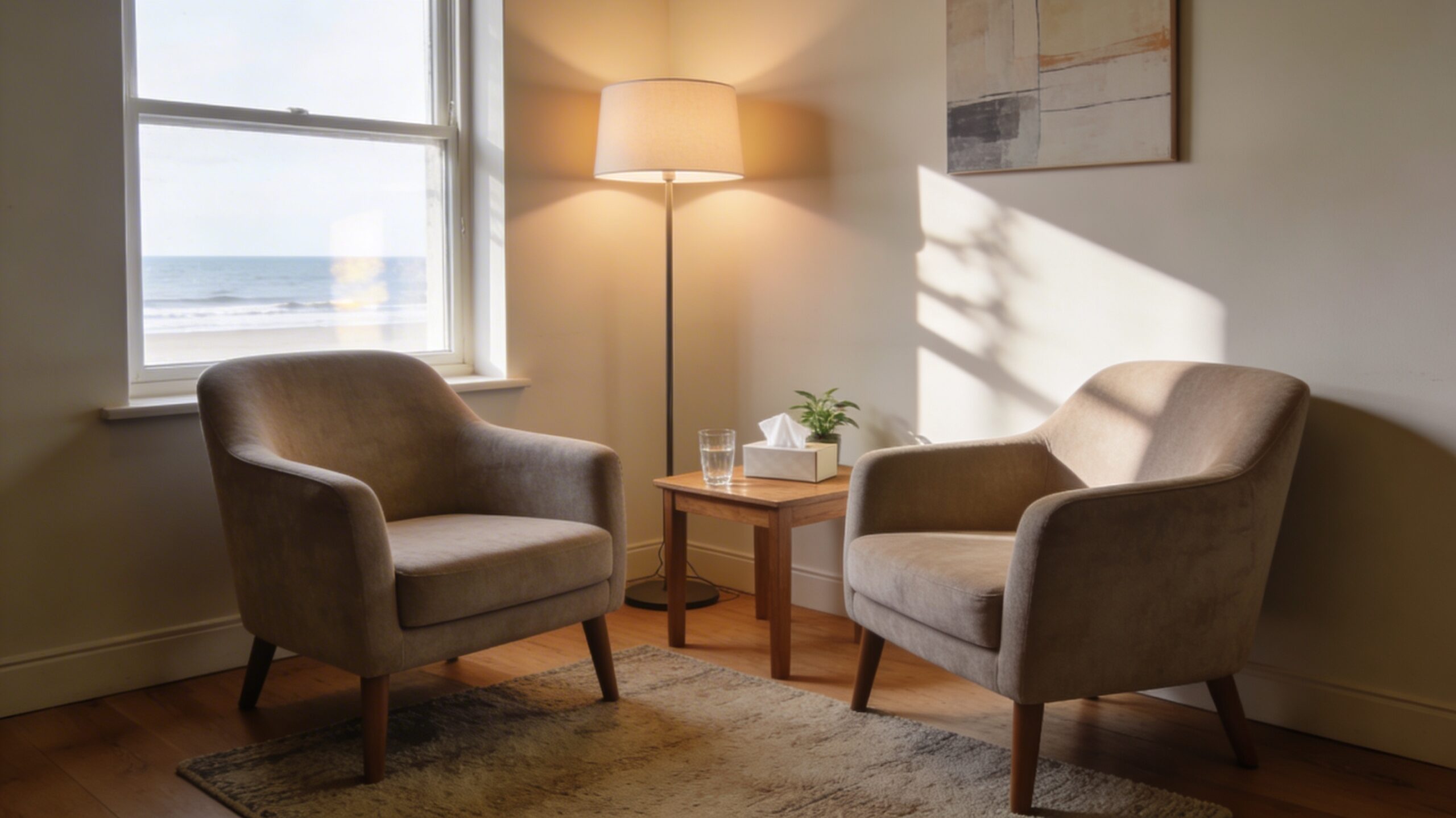
If you are thinking about working with a hypnotherapist for anxiety or panic here in Blackpool or on the Fylde Coast, you might also feel a little nervous about what actually happens in a first session. You may have seen stage hypnosis on TV, read mixed things online, or felt unsure whether you will still be in control. On top of that, anxiety itself can make anything new feel risky.
This article is here to slow everything down. I will walk you through, in plain language, what usually happens in a first one‑to‑one session with me when someone comes for help with anxiety or panic. Nothing here is a promise of a cure. It is simply a way of giving your mind a clear map, so you can decide calmly whether this kind of work feels right for you.
I’m Bri Watson, a hypnotherapist based in Blackpool, and this is what a typical first anxiety session with me tends to look like.
Arriving, settling in and talking about what you want
When you arrive for your first appointment, we do not start with hypnosis at all. We start with a conversation. The first part of the session is about getting to know you, your situation, and what you would like to be different. This is also your chance to ask questions, tell me about any past experiences with therapy or hypnosis, and say what you are comfortable with.
With anxiety and panic, people often describe things like racing thoughts, physical symptoms, dread before certain situations, or sudden episodes that seem to come out of nowhere. Sometimes there is a clear trigger, such as driving, work meetings, or crowded places. Sometimes it feels more vague, like “I am just always on edge”. We take time to map out where and when your anxiety shows up, how it affects your life, and where it does not.
We also talk about what “better” would actually look like for you in everyday life. For example, being able to sit through a work meeting without feeling your heart pounding, going into Blackpool town centre without scanning for exits, or being able to relax at home in the evening without replaying the day. Setting clear, realistic goals helps both of us know what we are working towards.
Explaining hypnosis in a grounded way
Before we do any trance work, I will explain how I use hypnotherapy, so you do not have to guess. In my practice the work is more Ericksonian and indirect than “You are getting sleepy” style hypnosis. That means I am not giving you orders or trying to overpower your will. Instead, we use a natural, focused state of attention to help your unconscious mind update old patterns.
We talk about common worries, such as:
- Will I be unconscious? (No, you stay aware enough to hear and respond.)
- Can you make me do something I do not want to do? (No, that would break trust and end the work.)
- What if I cannot relax? (We work with whatever state you are in. Many anxious people are surprised to find they can drift more easily once they realise they are allowed to keep some alertness.)
I often describe hypnosis as a way of helping your nervous system practise a different response while it feels safe. Rather than trying to “switch off” anxiety with willpower, we invite your unconscious mind to notice that it has other options available.
The gentle shift into trance
When you feel ready, we move into a more focused part of the session. I usually invite you to sit comfortably and we begin with conversation that gradually becomes more absorbing. There may be some attention to your breathing, to the way your body is supported by the chair, or to small details in the room. You do not have to close your eyes unless you want to. Many people with anxiety find it easier to begin with eyes open.
This part is not a rigid script. It is a flexible, Ericksonian‑style induction that adapts to you. I watch for small signs that your attention is narrowing and your body is settling, such as changes in breathing, stillness, or softness in the face and shoulders. Rather than “putting you under”, I am helping you drift into a state where your mind is still awake but less busy. You can speak if you want to, move if you need to, and at any point you can choose to pause or stop.
People often describe this state afterwards as “deeply relaxed but aware” or “like being absorbed in a book or film”. For anxious minds that are used to scanning for danger, even a few minutes of this kind of focused ease can be a new experience.
Working with anxiety and panic once you are settled
Once we have a reasonable level of comfort and focus, we begin the actual therapeutic work. What we do here depends on your goals and history, but some common elements for anxiety and panic include:
- Helping your unconscious mind separate genuine threat from old, over‑fired alarm signals, so you are not bracing all day every day.
- Exploring how your body does panic, step by step, and gently interrupting that sequence so it can complete differently.
- Using stories, metaphors or imagery that fit your life to offer new ways of responding to situations that currently trigger you.
- Building up inner experiences of feeling safe, steady and resourced, so your nervous system has more than one pattern to choose from.
Sometimes we might rehearse a specific situation in a calm, controlled way, such as driving down a motorway, walking into a supermarket, or speaking in a meeting. At other times, we may work more indirectly, helping your unconscious shift deeper assumptions like “I cannot cope” or “Something terrible is about to happen”.
Throughout, I am tracking how you are doing. If emotions come up strongly, we slow down. If you feel distant or checked out, we adjust. This is a collaborative process, not something that happens to you while you stay passive.
Coming back and looking after yourself afterwards
Towards the end of the trance work, we begin to bring your attention gently back to the room. This is done in a calm, unhurried way, so there is no jolt from relaxed to rushed. I may suggest that your mind keeps whatever has been helpful and simply lets anything irrelevant drift away. You will usually feel alert again within a few moments, though sometimes a little floaty or thoughtful for a short while.
We then take a few minutes to talk about your experience. You do not have to make sense of everything straight away. Some people feel immediate relief. Others notice more gradual changes over the following days, such as sleeping a bit better, feeling slightly calmer in situations that used to spark panic, or catching anxious thoughts a little earlier. We also talk about simple things you can do between sessions, such as brief breathing practices, gentle self‑hypnosis, or small behavioural experiments in the situations that matter to you.
We will also discuss whether further sessions are likely to be useful and at what pace. Anxiety and panic are very individual, so there is no fixed number that suits everyone. The aim is always to find a rhythm that feels supportive rather than overwhelming or rushed.
You are allowed to take your time
If you live in Blackpool or around the Fylde Coast and are considering hypnotherapy for anxiety or panic, you do not have to decide in a hurry. I offer one‑to‑one hypnotherapy sessions for adults in Blackpool and across the Fylde Coast, either in person or online, depending on what feels safest for you. Reading about the process, asking questions, and simply noticing how your body responds to the idea of this kind of work are all valid steps. Feeling cautious is not a sign that you are “too anxious for hypnosis”. It is a sign that your nervous system is trying to keep you safe.
If you would like to explore this further, you are welcome to reach out and ask about a first session. Whether or not you decide to book, you deserve support that feels calm, respectful, and genuinely interested in how your mind works, rather than promising quick fixes or dramatic transformations.
If you live in Blackpool or on the Fylde Coast and this way of working sounds like it might fit, you can read more about my 1:1 hypnotherapy sessions in Blackpool and the Fylde Coast.
Leave a Reply